
Introduction
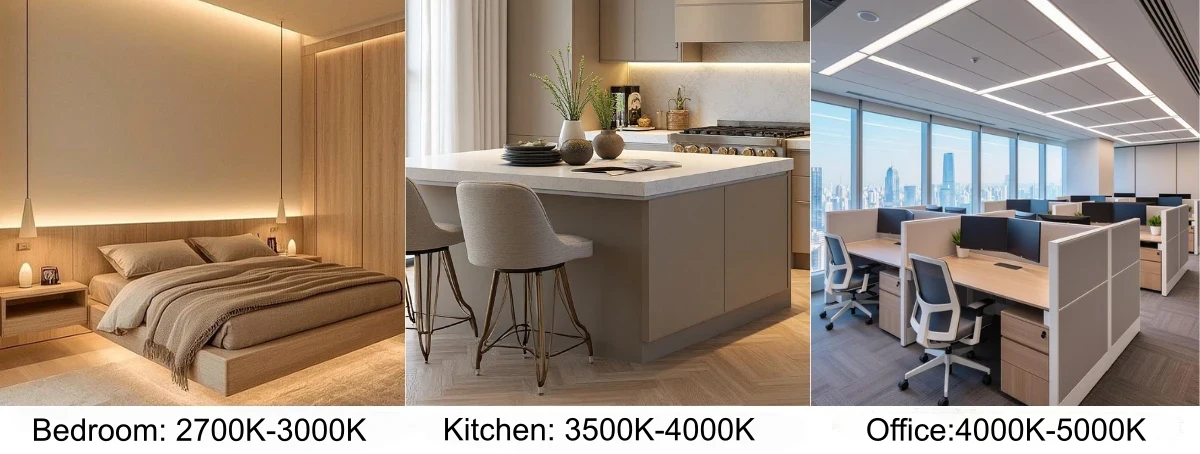
For a quick guide, use 2700K–3000K for bedrooms and living rooms, 3500K–4000K for kitchens and retail, 4000K–5000K for reading room, and 5000K–6000K for garages and outdoor areas.
An LED strip can deliver all the brightness you paid for and still make a room feel wrong. Too yellow, and a clean modern kitchen looks dated. Too blue, and a cozy bedroom turns into a hospital corridor.
The color temperature (measured in Kelvin (K)) of an LED strip is a major determining factor in the look of the LED strip. Kelvin tells you if it seems warm or chilly, Lumens tells you how bright it is.
In this article, we’ll explain Kelvin in simple terms, compare it with lumens and CRI, and help you figure out which color temperature works best for particular spaces and tasks.
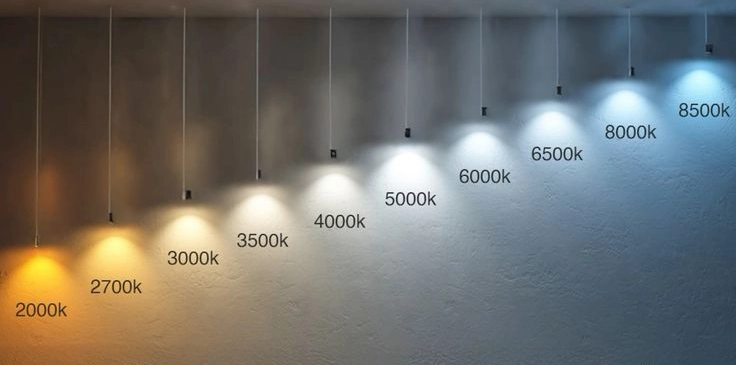
What Is Kelvin Color Temperature?
Kelvin (K) refers to the color appearance of white light. The scale is from warm to cool:
- Lower Kelvin (1800K–3000K) — warm white, with a yellow to amber cast. Think candlelight or an old incandescent bulb.
- Higher Kelvin (5000K–6500K) — cool white to daylight, with a bluish cast. Think noon daylight or an overcast sky.
One misconception: a 6000K strip is not “brighter” than a 3000K strip. Kelvin describes the apparent warmth or coolness of white light; it does not describe brightness or color-rendering quality. You can have a dim 6000K strip and a very bright 2700K strip — brightness is a separate number entirely.
For a full breakdown of warm, neutral, and cool options, see our complete guide to LED colors and color temperatures.
Kelvin vs Lumens vs CRI: What Is the Difference?
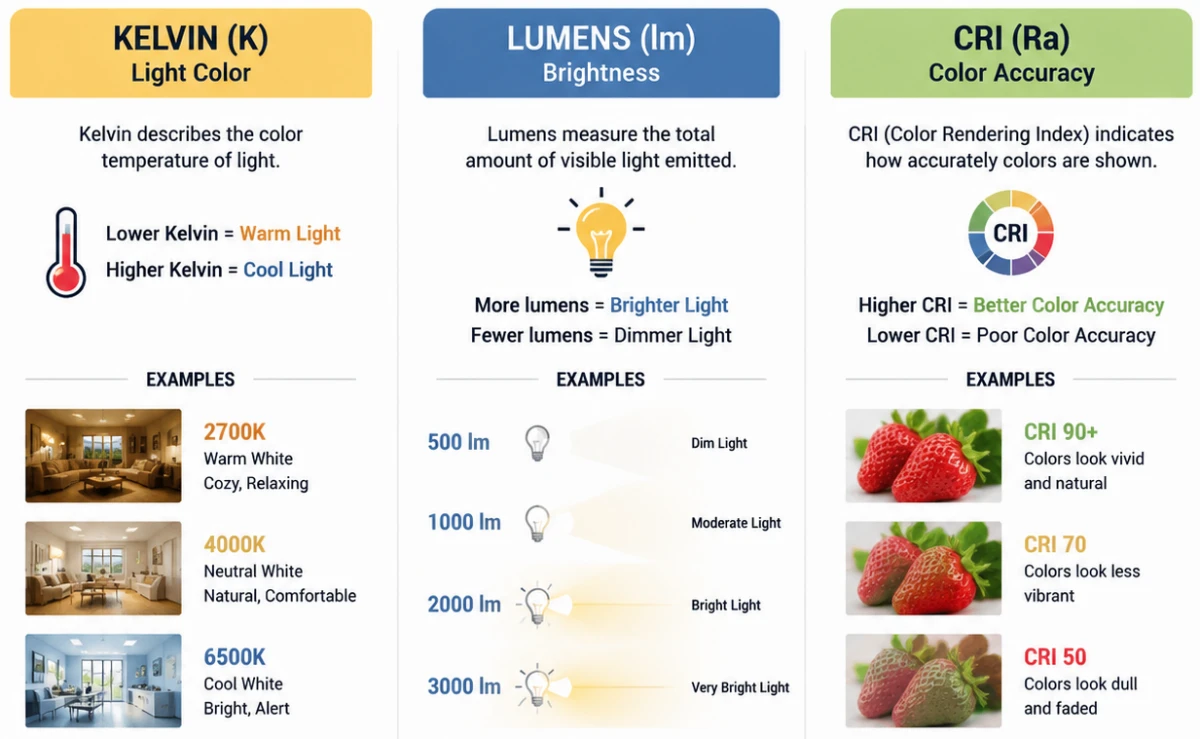
When choosing an LED strip, you may see Kelvin, lumens, and CRI in the specifications. They tell you three different things about the light.
Kelvin (K) tells you what color the light looks like. The lower the Kelvin rating, the warmer the light. The higher the Kelvin rating, the cooler the light. It does not tell you how bright the strip is.
Lumens tell you how much light the strip produces. More lumens generally mean more light output.
CRI (Color Rendering Index) tells you how accurately the light shows colors. A higher CRI usually makes colors look more natural.
The Main Color Temperature Ranges
Warm white (2700K–3000K). Soft, yellow-lit light. The standard for bedrooms, hotel rooms, living rooms and decorative or accent lighting, when the purpose is to rest, not see.
Natural white (3500K–4000K). Neutral light with little color cast. A safe middle ground for kitchens, retail, and workspaces where you want clarity without the clinical feel of cool white.
Cool white (5000K–6000K). Crisp, bluish white light. Ideal for garages, workshops, warehouses and outdoor places where visibility and detail are more important than ambiance.
See the difference:
2700K vs 3000K: Which Warm White Should You Choose?
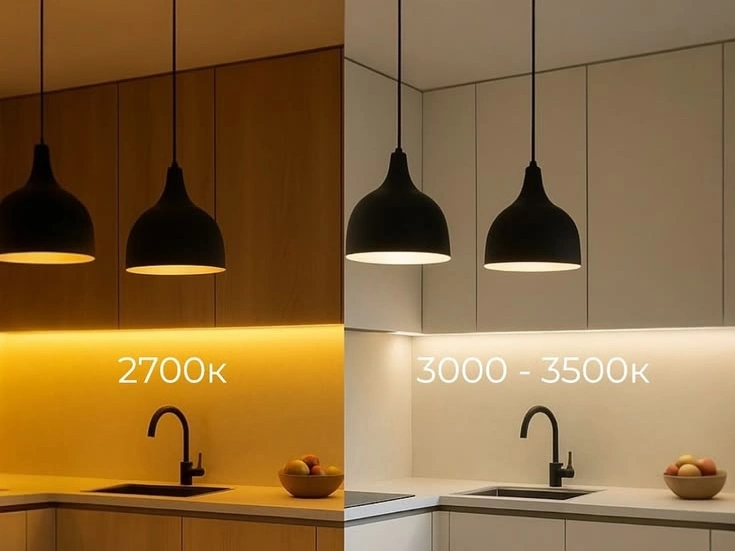
Both read as “warm white” to most people, but side by side the difference is visible:
| 2700K | 3000K | |
|---|---|---|
| Appearance | Softer and more yellow | Slightly whiter and cleaner |
| Best for | Bedrooms, lounges, mood lighting, and decorative lighting | Living areas, restaurants, and kitchens that need warm light with good visibility |
| Pairs with | Warm wood tones and earthy colors | Neutral, white, and gray interiors |
A practical rule: match the Kelvin to the room’s palette. Warm wood and warm paint call for 2700K; against white or grey surfaces, 2700K can look slightly dingy and 3000K usually reads better.
Fixed Color Temperature vs CCT LED Strip: Which One Should You Choose?
Fixed Color Temperature LED Strips come in a single value — commonly 1800K, 2700K, 3000K, 4000K, 5000K, or 6000K. You pick one, and every run in the project matches. This is the right choice when the design is settled and consistency across a large installation matters.
CCT Adjustable LED Strip combine two white channels (for example 2700K and 6500K) and let you shift between them with a controller. Useful for multi-purpose spaces — warm white in the evening, cooler white for working or cleaning. The trade-offs are slightly higher cost and a more involved control setup.
Recommended Color Temperature by Application
Residential Lighting (2700K-3000K): Bedroom, sitting room, dining room, under-cabinet lighting. Warm white keeps the space comfortable after dark.
Recommended products: Warm White LED Strip


Commercial and retail (3500K–4000K). Shops, showrooms. Natural white renders products and food accurately without feeling cold.
Recommended product: Natural White LED Strip

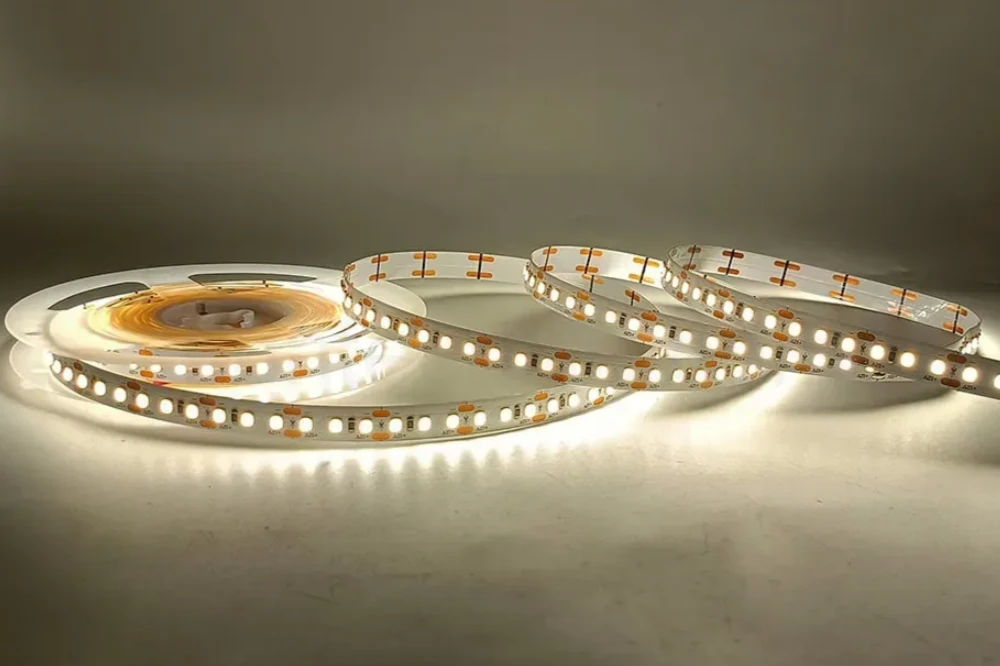
Architectural (3000K–4000K). Wall wash, linear elements, cove lighting. Use 3000K for warm materials such as lumber and brick 4000K for concrete stone and glass.
Recommended product: COB LED Strip

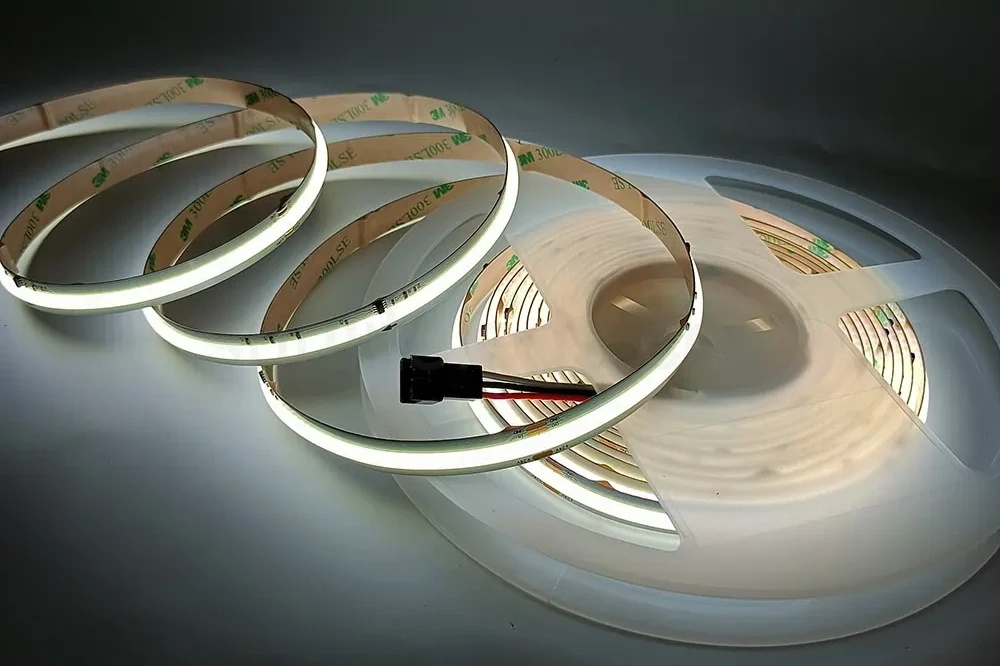
Outdoor and industrial (5000K–6000K). Garages, warehouses, workshops, perimeter lighting. Cool white maximizes visibility and contrast.
Recommended product: Outdoor Waterproof LED Strip

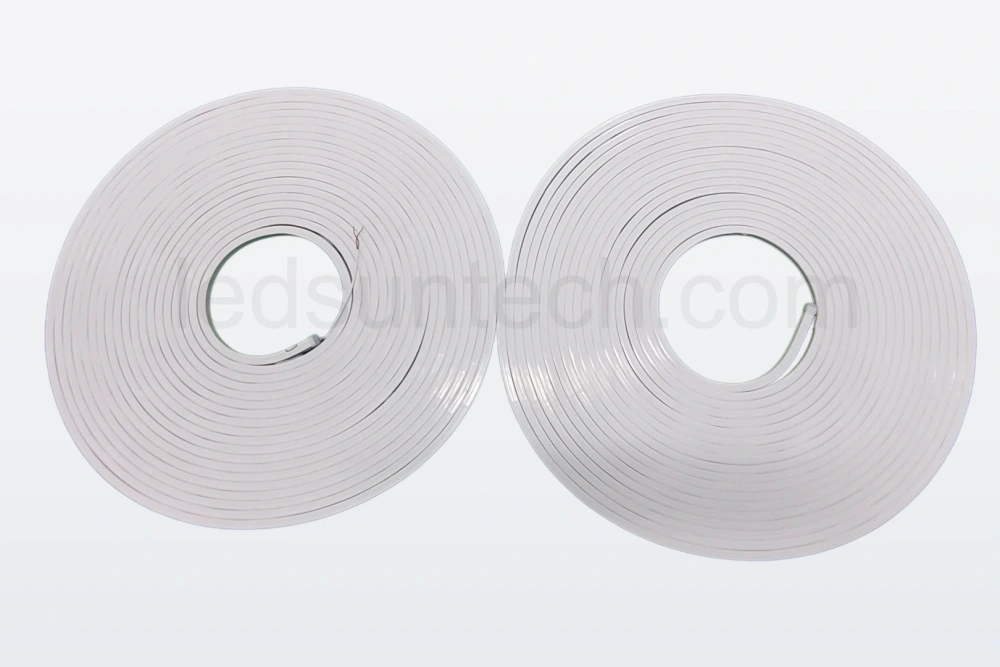
Quick Reference:
| Application | Recommended Kelvin | Why |
|---|---|---|
| Bedroom / Living Room | 2700K–3000K | Warm and comfortable light |
| Hotel | 2700K–3000K | Warm and welcoming atmosphere |
| Kitchen / Retail | 3500K–4000K | Clear, neutral light |
| Workspace | 4000K–5000K | Clear light for work areas |
| Outdoor / Industrial | 5000K–6000K | Cooler light for clear visibility |
Beyond Kelvin: Specs That Also Matter
Color temperature is one part of the result. A few other specifications shape the final look just as much:
- CRI. For kitchens, retail, and anywhere color accuracy matters, look for CRI 90 or higher. The step up from CRI 80 is visible in skin tones and wood grain.
- LED density. More LEDs per meter means smaller gaps between light points and fewer visible dots — especially important if the strip runs without a diffuser.
- Diffusers and neon-style housings. A diffuser or silicone neon housing spreads the light into a continuous line and hides individual LEDs.
- Installation environment. Wet areas, saunas, and outdoor projects demand the right IP rating — IP67 or IP68 where steam or water exposure is constant — and heat-resistant materials. Standard PVC sleeves will yellow, crack, and fail in high-temperature settings.
FAQ About LED Strip Color Temperature
What Kelvin is best for LED strip lights?
For homes, 2700K–3000K. For retail, 3500K–4000K. If one strip needs to serve multiple purposes, a CCT tunable strip covers both.
Is 4000K better than 3000K?
Neither is better — they suit different palettes and purposes. 3000K flatters warm materials and skin tones; 4000K looks cleaner in neutral, white, or glass-heavy interiors.
Can you mix different color temperatures in one room?
Yes. You can use various Kelvins for different sections but using the same color temperature provides a more consistent effect.
What color temperature is best for architectural lighting?
3000K–4000K covers most projects. Match the value to the material palette: 3000K for timber and warm stone, 4000K for concrete and glass.
Does a higher Kelvin mean a brighter strip?
No. Kelvin measures color temperature, not brightness. Brightness is measured in lumens, so a 3000K strip can be brighter than a 6000K strip.
Closing
Color temperature is the spec that most changes how a space feels, and it is the cheapest mistake to fix at the ordering stage. Decide on the mood first, match the Kelvin to the room’s materials, then verify lumens and CRI before you commit. If you are torn between two values, order samples of both and test them on the actual wall at night — ten minutes of testing beats a re-order.
